Friday, July 12, 2013

2013 Top 20 Business Books List (Part II)

Q&A Section
  • Question: Can you Recommend Any Good Business Books for Executives?
  • Answer: Absolutely (Part 2)! 
This is part two of my 2013 Top 20 Business Books List. If you missed the first installment, you may prefer to start there. In part one, I discussed ten books under the categories of Economics, the Environment, Human Resources, Leadership, Marketing and Operations. Today, we will end the list by going over the books on Strategy. Yes, half of the books in the list resided in just this one category. By using trader lingo, we could say that I am overweight Strategy.
Picture of Brown book over golden marble table with 2013 Top 20 Business Books List on cover
2013 Top 20 Business Books List
Why so many Strategy books? A reason could be that Strategy is important in business. Another more mundane reason may be that bookstores offer many more books dealing with Strategy than any other business subject; something I didn't test.
The real reason why my list is overweight Strategy is that it includes three series. There are three books by Clayton Christensen, three more by Peter Drucker and two additional ones by Jim Collins. Think of it this way: if each author was represented by a single book the total number of books under this section would be five; half as many.
While there is a high risk of repetition when suggesting various books from a single author, I did not make the choices lightly. Each book series was highly influential in my professional life. In all cases, every book was needed to get a complete message from the author.
Enjoy this the second part of my 2013 Top 20 Business Books List.


Strategy

Clayton Christensen
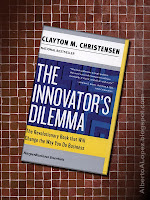
Beauty shot picture of book by Clayton Christensen, "The Innovator's Dilemma", "When New Technologies Cause Great Firms to Fail"
When New Technologies 
Cause Great Firms to Fail;
Clayton Christensen
We start with a trilogy that offers the latest in strategic thinking. Clayton Christensen, Professor of Business Administration at the Harvard Business School, created three fantastically insightful books. Each builds on the previous.
Thus, I suggest to start with The Innovator's Dilemma, then follow with The Innovator's Solution and end with Seeing What's Next. While each book offers new and independent ideas, they are all elegantly interconnected. Christensen's concepts are effective either way, in isolation or grouped together. It is this balance between individuality and unity that makes me think so highly of his books.
Through three three books, Christensen gives structure to a series of concepts; all tremendously important for business.
Beauty shot picture of book by Clayton Christensen and Michael Raynor, "The Innovator's Solution", "Creating and Sustaining Successful Growth"
Creating and Sustaining 
Successful Growth;
Clayton Christensen
Through his work, he suggests that strategic decisions made by businesses are binary in nature. There are just right or wrong choices. Right decisions propel the business far ahead of competitors and industry standards. Wrong decisions, on the other hand, hold the business back in mediocrity. The implied message is that all organizations continuously make the wrong choices.
His logical frame begins with an analysis of what happens when innovation disrupts an industry. How do market participants respond? What do market leaders do? What are the available alternative routes? What happens when each of such routes is selected?
Beauty shot picture of book by Clayton Christensen and Scott Anthony, "Seeing What's Next", "Using Theories of Innovation to Predict Industry Change
Using Theories of Innovation 
to Predict Industry Change;
Clayton Christensen
Next, he identifies and explains the common patterns he found. With superior insight, he disproves generally accepted business beliefs that will inevitably take a company to its perish. He breaks with tradition. From there, he studies the predictability of future performance based on corporate action.
Is your head spinning yet? Yes, all that I just wrote is quite cryptic. To me, everything makes sense. But to someone who has not read the books, these words probably sound like gibberish. If I am being a little ornery, it's because I want to make sure that you read these books and discover on your own. I don't want to give too much away.
From all that I have learned over the years, I have come across many neat techniques and ideas. But I found it almost impossible to discover new fundamentally based concepts. That's why these three may be the most important books I own today. In the future, as their prescriptions evolve from strategic advantages to best practices, there may be other more important books. But for now these three are the best in this list. As you read them, try to prevent the natural tendency to simply follow the text. Instead, I recommend that you stop periodically to make an inventory of what the book just described. Along that way, you will get the best from the them.
These three books are too valuable. As an executive, you can't afford not to read them. Start now.

Beauty shot picture of book by Peter Drucker, "Managing for the Future", "The 1990's and Beyond"
The 1990's and Beyond;
Peter Drucker
Born right after the turn of the 20th century, Peter Drucker had a front row seat to the nation's evolution from an aspiring and disorderly bunch, to leaders of the economic and military worlds.
From his great perspective, he was able to discern distinct macro patterns from the otherwise noisy global picture. Peter Drucker used insights from such patterns throughout his professional life. He became the most prodigious business thinker of the century.
The three books included here describes these patterns in an extensive fashion.
He notes, for example, that coal and the steam engine had a similar effect on the economy as today's computers. Coal and the steam engine gave birth to the locomotive. Likewise, computers gave birth to the internet. Both locomotives and the internet reduced distances and opened new markets. Just like locomotives created a global economic boom, so would the internet.
Beauty shot picture of book by Peter Drucker, "Managing in a Time of Great Change"
Managing in a Time 
of Great Change;
Peter Drucker
Early in his career, he recognized the impact that knowledge would have on productivity. Along the way, he coined the term knowledge worker. Later he would dedicate much of his effort to further develop his understanding of knowledge workers, the elements that drove their productivity and their emotional makeup.
Some have recognized Drucker as the father of modern business. During most of the first half of the 20th century, corporate managers studied law rather than business. At the time, there was no such thing as a business school.
Drucker has also been credited with applying strategy to business. Prior to such change, strategy was exclusively associated with war.
Beauty shot picture of book by Peter Drucker, "Managing in the Next Society"
Peter Drucker
As if these accolades weren't enough, Drucker was too the personal adviser to Jack Welch. Much of what Jack describes in his books were originally conceived during meetings between the two giants.
It should be evident by now that a collection of books that does not contain Drucker is simply incomplete. He has greatly impacted what we now know as business. He can't be missed.
It is incredible to think that his books are full of new and relevant ideas, even by today's standards. Just imagine how much of a revelation were his innovations 40 years ago.
Yes, there are a couple of repetitions within the three books. The idea of a knowledge worker, for example, is mentioned in all of the books. But Drucker is too important of an erudite for lazy research. Besides, each book covers a broad selection of different topics. So I had to include them all. I enjoyed these books greatly and so should you.


Jim Collins
Beauty shot picture of book by Jim Collins, "Good to Great", "Why Some Companies Make the Leap...and Others Don't"
Why Some Companies Make 
the Leap...and Others Don't;
Jim Collins
Everyone has a theory of what makes a good company. These beliefs are clearly visible in the way we conduct business.  But the reality is that no one really knows with a high degree of scientific certainty whether what they think is valuable or just voo-doo.
No one, that is, except Jim Collins. His first book, Good to Great, became a sensation precisely because it offered strong evidence that contradicted many widely held beliefs. Collins conducted an exhaustive study of public company data that lead him to many important conclusions. He framed these conclusions with the question: what makes a Good company become Great?
And that is how it all started. Collins applied regression analysis to determine how Good companies became much better than their peers. His first book documents the methodology he used and the results obtained.
Beauty shot picture of book by Jim Collins and Jerry Porras, "Built to Last", "Successful Habits of Visionary Companies"
Successful Habits of 
Visionary Companies;
Jim Collins
Very impressive is the fact that he was able to turn a scholarly document of such data-rich nature into a narrative that any manager could follow.
How do great companies set goals? What do they do or stop doing? What are the characteristics of their employees and leaders?
After dominating such a beast of a project, it occurred to Jim and his team that they should try to conquer an even greater challenge; their aim was to transcend time. They wanted to know what does it take to create a company that could outlast all other? Where there any special kind of founding principles? What about culture and practices? Was the leader's vision important?
I hope that by now you are excited with anticipation. The two books are fantastic and should be read in order, to get the most out of them. Jim is clear in his delivery. The ideas are all actionable on their own or as part of a complete restructuring effort. Best of all, his findings fit nicely with results from many other great researchers.
They are so good that you will want to share these books with everybody in your team.


Thomas Friedman
Thomas Friedman, multiple Pulitzer Prize winner for The New York Times, offers one of the most relevant geo-economic insights of our time.
Beauty shot picture of book by Thomas Friedman, "The World Is Flat", "A Brief History of the Twenty-First Century"
A Brief History of the 
Twenty-First Century;
Thomas Friedman
During one his many travels abroad, he noticed a pattern. The international playing field was beginning to level. The gaps in information, market transparency and access to resources between people in advanced nation, like the US, and those living in places like India begun to converge. It was this leveling that inspired the name of the book. The World is Flat describes how, for the first time and thanks to the internet and the digital age, people in faraway places are beginning to participate at a more equal level in our markets.
When I hear employees complain that the Chinese are taking their jobs, I reply that the Chinese are also fighting for my job. Even business owner's risk losing their job to business owners abroad. You see, the Chinese have a deeper commitment to becoming educated than most Americans. While we are trying to stop schools from giving homework to our children, Asians are often upset when homework is too easy or when there isn't science work for students to do at home. Now that many great colleges are offering free education online, it is a real shame that the only ones taking advantage of it are foreigners.
Then add the fact that Asians have a solid work ethic and you now can see the challenge. They are willing to learn more, work harder and get paid less. Even Steve Jobs once said that it was difficult for Americans to compete with the Chinese to make the iPhone. But the problem is not limited to factory workers and other forms of skilled labor. There is an incredible amount of new patents being created by Chinese divisions of companies like Microsoft. In no time, China will graduate more engineers than the US and the pressure on knowledge workers will increase. This should be a warning to doctors who think that they will always be able to charge as much as they want. Many X-ray charts are already being evaluated by experts in India overnight, for example.
A hungry and aggressive manager in China with such an educated and dedicated team, could easily push an American company into failure; ending all future-wealth dreams of the North American business owner.
For the first time, this book made me realize that we have now extended the major leagues to include additional and very competitive teams and players from abroad. Competition will therefore get tougher rather than easier.
The change is inevitable. We should stop complaining and start working faster and more effectively. It is time to stop the leisure that so many people in this country feel entitled to.
Always do remember that all these new comers don't want us to fail. They just want to drive the same BMW's. You will enjoy this book very much.


Kenneth Gronbach
Would you like to know what the future holds for your industry? How about any other industry? There is a method that renders a future economic forecasts of unbelievable accuracy.
Beauty shot picture of book by Kenneth Gronbach, "The Age Curve", "How to Profit from the Coming Demographic Storm"
How to Profit from the Coming 
Demographic Storm;
Kenneth Gronbach
Births are the only event that takes place in the past that can also offer a window into the future. While Harry Dent is perhaps the best known of the practitioners of demographic based analysis, it wasn't until Gronbach's book that I came across the concept. I therefore credit Gronbach with helping me understand it. The book is easy to read and his examples are clear and relevant.
Why did the number of Honda motorcycle dealers decline after Top GunThe movie hit theaters everywhere and created a great image for the products. Why did sales decline despite Honda's better engineering, better products and more competitive prices? Even the extensive marketing campaigns couldn't prevent revenue losses.
The reason behind this tragic business tail is that new wives do not approve of street rockets for their new husbands. Want to understand more? Read the book.
I will warn you that it'll be too easy to dismiss any ideas as being nice but unimportant for daily use. Bad managers keep their schedule busy by running from fire to fire. They are chaos experts. Like five-year-old's playing soccer, these leaders are data-dependent. They cluster together chasing the ball rather than running to where the ball will be. Like with soccer, it takes maturity to get a manager to see beyond the short term. This is why I believe that a great manager has the ability to compartmentalize short, medium and long term goals in a way that none is ignored. We should always keep an eye on all three of these periods regardless of the number of emergencies at hand.
The information contained in this book will fit nicely in the long term compartment. This is not because demographic-driven events never take place. No. It is because the long term eventually turns into medium and then short term. All demographic considerations thus transform from data into actionable strategy.

2013 Top 20 Business Books List
While it is difficult to recall every important fact in so many books, especially those I read over ten years ago, I aimed at creating a comprehensive list that could serve as a great informational foundation for any executive. Now that the list of complete, I hope that you find it relevant and valuable. 

Wednesday, July 10, 2013

2013 Top 20 Business Books List (Part I)

Q&A Section
  • Question: Can you Recommend Any Good Business Books for Executives?
  • Answer: Absolutely! 
Photo of black hard cover book with the phrase "2013 Top 20 Business Books" embossed on its cover
2013 Top 20 Business Books List
I will split it into two parts. Today, I will cover the first ten books.

Introduction
Many years ago, my grand father thought that the time had come to push my father, who was a teenager at the time, to read a real book. As a normal youngster, my father had many more important things to deal with than to read books. Tired of the pressure nonetheless, my father asked grandpa for a book to read. "I want to make sure that I read a good one", he said. To what my grand father replied, "how would you know it's good if you haven't read the bad ones?"
If I was to follow my grandfather's advice, I would have you read the good books as well as the bad ones. But just this time, it may be a good idea not to follow the wise-man's suggestion.
I have read over 250 books, most of which were business related. At an average speed, reading all of them should take about five months of solid dedication. Unfortunately, about half of them were a waste. From the rest, I consider 20 or 8% of the books to be fantastic.
As a way to benchmark the list, let's compare to Zappos' Library. Zappos, the online shoe retailer owned by Amazon, has 38 books as part of the library they offer to their employees. Zappos lets its employees take any of these books home any time they want. This is part of their seriously solid culture. I visited their offices and found their library to include the books I had read and many of the ones I am suggesting in this article. As someone who admires the company, I felt this was a great coincidence.
Photo of reading glasses over an open book. The subtitle reads "Lee un Buen Libro" in Spanish.
Lee un Buen Libro
But what if your top book is not on my list? Well, consider the fact that I have not read everything. Besides, it is always possible that I may be wrong.
In any case, you can still feel reassured that all the books on my list are serious contenders when compared to all other books, even if not absolute number-ones for each category.
A few of the books I am recommending are easy to read thanks to their narrative style. Books from authors Louis Gerstner and Jack Welch fall under this category. Then there are those that are densely packed with technical information. These may need to be read twice. But don't even think of skipping them. While harder to read, these contain incredibly innovative concepts. That is why they make it into the list. Paco Underhill's book and Clayton Christensen' fantastic trilogy fall under the latter more difficult category.
As a group, these books cover most topics within business; a coincidence that makes me feel good about the selection. From reading the blog you should know by now that I like to maintain broad business coverage.
The books are placed within various business categories to prevent having to rank unrelated books together. There are books on Economics, the Environment, Human Resources, Leadership, Marketing, Operations and Strategy.
Following are the first ten books from my 2013 Top 20 Business Books List. The second set of books will be available in a following post. Enjoy!


Economics
If you manage a business, you must understand economics. How else will you see the environment outside your window with the clarity needed to allow you to chart a successful plan? Let's also not forget that economics helps us understand how is it that people make buying and selling decisions; something of paramount importance.

Beauty shot picture of book by Tim Harford, "The Undercover Economist", "Exposing Why the Rich Are Rich, the Poor Are Poor-and Why You Can Never Buy a Decent Used Car!"
The Undercover Economist
Exposing Why the Rich Are Rich, the Poor Are Poor-and Why You Can Never Buy a Decent Used Car!
Tim Harford
I have read more books on economics than on any other subject. While many of them are easy to read and understand, these are often so basic that they feel repetitive; covering the same simple principles over and over.
Then, there are a few more that offer interesting new ideas but at a high access-cost to the reader. They are just hard to follow by those not intimately familiar with economics concepts and terminology. Because I felt that a general and clear understanding of the subject is preferable for typical executives, I stayed away from the latter; those books covering complex concepts. Instead. I opted for a book that could communicate with a high degree of clarity and relevance.
Tim Harford's book exceeded my threshold. It is simple to understand, broad in nature, focused when it matters and, at times, very funny; if there is such a thing as a funny economics book. It breaks the ideas discussed into easy-to-relate fragments. Why is it impossible to get a good used car? Read the book. You'll enjoy it. By not getting deep into the weeds, this is a book worthy of periodic recommendation.


Environment
Talking about the environment turns off many executives. But things are changing. While there was a time when employees were abused by their employers, today the best companies are those who treat employees with dignity.
I am not talking about feeding a sense of entitlement or giving in to value-eroding unions. Instead, I am referring to understanding that we are all members of a community that thrives when we all thrive. Game Theory tells us that to win big and often, everybody needs to give-in a little.
When we learn to honor our civil responsibility, by eliminating all harmful outputs, companies and citizens win. Notice that I didn't say we should protect this or that part of the environment. Making such statements inevitably leads to the kind of debates that derails the conversation away from the real issue. No harmful outputs is the goal instead.
This is not a matter of being a tree-huger or a regulation-lover; neither of which I am. In fact, I believe that regulations lead to wrong and unexpected outcomes; no matter how well intended such regulations may be.
In markets, greed is behind the creation of all of the value gained by every participant. That is what Adam Smith's invisible hand time-tested concepts suggest. Likewise, I feel that it is possible for greed to drive environmental responsibility. In other words, I believe that market forces, and not an over reaching government, lead to the right environmentally responsible solutions. It just takes leadership and confidence. The same stuff needed to treat employees with dignity. Note that this section may prove to be of greatest difficulty to many leaders.

Beauty shot picture of book by Ray Anderson, "Confessions of a Radical Industrialist", "How my company and I transformed our purpose, sparked innovation, and grew profits--by respecting the earth"
Confessions of a
Radical Industrialist
Confessions of a Radical Industrialist
How my company and I transformed our purpose, sparked innovation, and grew profits--by respecting the earth
Ray C. Anderson
Innovation is the best tool for business. At least from the point of view of economics, innovation is the only multiplier in the master productivity formula. To establish the size of a given economy, add labor and capital together and multiply the result by innovation. While labor and capital lead to linear growth, innovation leads to exponential expansion.
It is therefore essential that we deploy innovation to solve the challenge of creating businesses that are free from harmful outputs; as we have now defined our environmental responsibility. The target is for the same engineers that find better ways for business to profit to also devise creative solutions to the environmental challenge.
Interface Inc., lead by former CEO Ray Anderson, did exactly that. It didn't need regulations to become more responsible. Along the way, the company discovered that solutions that eliminat harmful outputs also improved company efficiency and subsequently raise profitability.
What would you do if you were trying to find the best way to transport a product from China to the US; at the lowest cost, fastest time, with the lowest risk of loss, and in the most customer-centric form? You would hire expert engineers to design everything: from packaging, to inner and outer cartons, to the best logistical route. Well, the environmental challenge is no different. You need engineers that will innovate for you. They will design changes that will eliminate waste and thus save you money. If you do it better than your competition, customers will be happier to spend more money with you. This is exactly what Interface Inc did. And Ray Anderson clearly describes every aspect of this process in his fantastic how-to guide for business leaders.
That Mr. Anderson was able to uniformly motivate so many professionals to solve environmental problems while increasing corporate profits shows his leadership ability. He empowered people to a higher goal.
At some point through the book, it will be clear that Anderson's environmental plans became a strong influence on President Obama's initial months in office. But don't let this turn you away from the book. Anderson accomplished incredible results by motivating and empowering others. In contrast, Obama uses fiat and dictatorship as part of a plan that has predictably failed to gained any traction. One was a competent leader while the other is not. Anderson obtained the results that Obama can't. The book is simply about doing things right and in no way endorses the incompetent White House resident.
Because it deals with an inevitable future where there will be less resources available, this book is a must-read for all leaders; especially those who use LEAN.


Human Resources
For Jack Welch, Human Resources was the most important side of business while at General Electric. This is, after all, the department that finds and develops the best employees the market can offer. HR establishes compensation, educates and gauges adherence to rules. As a result, this department can make or break your business.
What's interesting is that there aren't a lot of good books that deal with HR. It is as if legal compliance and insurance contracts were all that HR had to deal with. These facts make the following book even more valuable as it deals with the fundamental science behind human success instead.

Beauty shot picture of book by Daniel Goleman, "Emotional Intelligence", "Why It Can Matter More Than IQ"
Emotional Intelligence
Why It Can Matter More Than IQ
Daniel Goleman
I doubt that Daniel Goleman had the slightest idea that his research would become a cult. The term Emotional Intelligence has certainly taken over the business education industry.
While he wasn't the first to coin the term or even to discover that IQ (Intelligence Quotient) scores failed to have any correlation with human success in life, he did develop the subject to its point of critical mass. Thanks to him, Emotional Intelligence has now been democratized. We can all benefit from it.
Be prepared to read a highly technical book. It is, after all, a seriously scholar paper. This means that since you are not a psychologist, you will probably find much of the initial terminology a little dense. But be patient. Soon, you will be describing the Limbic System with the same degree of dexterity as any surgeon.
Today, every business school offers courses on Emotional Intelligence, the kind of intelligence that matters in the real world and which is the focus of this book. Look online and you will find countless Emotional Intelligence groups and certification programs. Regardless, this book is the only original.
Next to Emotional Profiling, Emotional Intelligence is the most important concept to master. Unfortunately, I have yet to come across a good book on Emotional Profiling. Thankfully, Emotional Intelligence is well covered here.
Understanding the book's concepts will also result in a much happier you. Not because this is a Kumbaya book, but because it clearly explains how you are and what can be done with what you have. This book is so good that it is often quoted by the best business writers.


Leadership
The books in this section are by far the easiest to read. Narratives seem to always resonate with people. Deep inside, we all like stories. But these are not just superficial stories. No endless Rich-Dad-Poor-Dad narratives where one is left wondering where the new insights were. No! These are documents full of the right stuff. They have as much essence as a Harvard Business School case study.

Beauty shot picture of book by Andrew Grove, "Only the Paranoid Survive", "How to Exploit the Crisis Points That Challenge Every Company"
Only the Paranoid Survive
How to Exploit the Crisis Points That Challenge Every Company
Andrew S. Grove
Only the Paranoid Survive is an incredible book. It narrates the difficulties endured by Intel on its way to becoming the company we now know. There was a time that things were so bad that Andy Grove, the author, faced the possibility of being fired. This prompted him to explore what would happen if he was fired and then re-hired for the same position? He asked, what would a recently hired Andy do with the problems? What would the changes be? Then, with his new insight, he executed. There were no sacred cows or pet projects left. This became a unique moment highlighting the importance of introspection; a point discussed in Emotional Intelligence.
The book addresses how Intel was reinvented after the company had to completely abandon what it did best in order to survive. Andy also discusses the interesting concept of 10x performance improvements.
After reading Only the Paranoid Survive, you will be left with the conviction that seeing way into the future is indeed possible when surrounded by capable people.

Beauty shot picture of book by Louis Gerstner, "Who Says Elephants Can't Dance?" "How I Turned Around IBM"
Who Says Elephants
Can't Dance?
Who Says Elephants Can't Dance?
How I Turned Around IBM
Louis V. Gerstner
I came across this book by accident. I found it on a bargain shelve at a TJ Maxx. You know, the kind of shelve where everything looks like garbage. It was quite a find, if there was ever one.
Since the book is old, you may have difficulty buying it. It is nonetheless worth the search.
Louis Gerstner came from McKinsey via American Express. Next to the Boston Consulting Group and Bing and Company, McKinsey is at the top of the business consulting world.
His ability to be both incisive and a clear thinker meant that he was born to solve complex problems; and it turns out that IBM had massive problems indeed. This book narrates his experience trying to break bureaucracy and lethargy at Big Blue. After his arrival, Wall Street analysts asked what his strategic plan was. He responded that IBM had lots of those in their file cabinets. Clearly, that statement took backbone.
Under Gerstner, IBM went from a capital-intensive electronics manufacturer to a high return-on-capital consulting firm. Profits and employee morale skyrocketed. It is perhaps the best reinvention of a company in the history of American capitalism. Gerstner prevented IBM from experiencing a Kodak moment. The book serves as a guide on how to successfully turnaround a business.

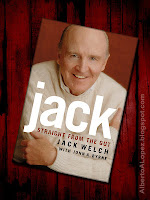
Beauty shot picture of book by Jack Welch, "Jack", "Straight from the Gut"
Jack
Jack
Straight from the Gut
Jack Welch, John A. Byrne
To many, Jack Welch is the best CEO of our time. Direct and unstoppable, this man was once known as Newton Jack. After taking the leader's chair at General Electric, he cut employees by such large numbers that it was said that only the buildings were left standing. He then started the turnaround. Under his control, GE became insanely profitable. Employees delivered much more value for him than for any other executive anywhere.
Jack introduced the idea of cutting the bottom 10% of employees to replace them with better people. His belief in education resulted in Crotonville, GE's Leadership Development Center where all promising stars are prepared to lead one of GE's many companies. Jack also took Six Sigma, Motorola's operational invention, to the ultimate level. By defining clear but demanding goals, Jack created a culture of performance never before seen in industry. If you like your job as a corporate leader, you will love this book.


Marketing
The art of creating demand for your products depends on your ability to understand your customers. The two books listed here are, without question, miles above any marketing theology books. Both rely on very solid research. They have proven to be effective under all circumstances.

Beauty shot picture of book by Paco Underhill, "Why We Buy", "The Science Of Shopping"
Why We Buy
Why We Buy
The Science Of Shopping
Paco Underhill
When it comes to Paco Underhill's work, I could go on and on dishing out accolades. I understood consumers and their shopping behavior only after reading this book. Before the book, I thought I knew something. After understanding Paco's work, I realized I was wrong. Chances are that you too will find much of what you're missing.
This book has tons of great information; so much so that it is like drinking water from a fire hose. No matter how thirsty you are, it is still a lot of information coming your way. I therefore recommend that you allocate enough time to fully digest the many great concepts Paco shares with his readers.
For a short insight into the solid work done by Paco and his army of researchers, read my previous post on this book.

Beauty shot picture of book by Clotaire Rapaille, "The Culture Code", "An Ingenious Way to Understand Why People Around the World Live and Buy as They Do"
The Culture Code
The Culture Code
An Ingenious Way to Understand Why People Around the World Live and Buy as They Do
Clotaire Rapaille
Do you know what's the difference between what Americans and the French think of cheese? American's view cheese as dead. It comes in a body bag. You keep it in the refrigerator. It's cleansed through pasteurization. The French, on the other hand, view their cheese as alive. It constantly evolves (grows more mold). It is kept outside the refrigerator. It's not pasteurized.
But the interesting question here is not about cheese. Instead, all value lies on the methods Clotaire Rapaille used to figure what we think about cheese. Think about it: we all know that consumers would never describe their food as dead, for example. This is what's most impressive about his work. He synthesizes research results until the solution is clear. What looks like a soft science after initial review, turns out to be very effective at deciphering what people want; all without asking them for a description. No need for the usually misleading focus group. Even Henry Ford commented that if he had asked customers for what they wished for during the developing the Model T, they would have asked for faster horses.
Mr. Rapaille's work and credibility are simply fantastic. He is on retainer with almost all the big companies in the US. His book is therefore a very important tool for anyone wishing to create strategic initiatives aimed at satisfying consumers.


Operations
What would you answer if I asked: what's the main goal of your operations department? I have asked this same question to dozens of operations managers and found the results to be quite disappointing.
The elimination of all waste! That's the goal. Time, labor, money and space are just a few forms of the resources that could be wasted. As a result, operations should engage with every aspect of business. Sadly, I have come across managers who think that operations are only responsible to supply desks and pens to employees. What a waste of opportunity.
Think about it. As a manager, you have two main responsibilities: to increase sales plus reduce costs. Operations deals with half of this equation. Yet, it is seldom taken seriously in business. Some managers think that being tough while negotiating with a vendor is all they can do to eliminate waste. Others think that counting toilet paper sheets delivers the goods. The problem with either is that they are treated as an art that only the manager is capable of doing, rather than a portable system that could be carried by all employees. They'll never become part of the company's culture and will have no chance at creating continuous improvements. To be of real value to the business, any waste-eliminating practice must be systemic. The books I selected send this message very clearly. They also show how important operations are for a business. Best of all, they do not get lost in the statistical jungle of LEAN and Six Sigma as many other books do.

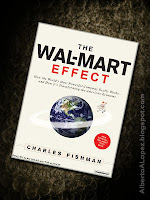
Beauty shot picture of book by Charles Fishman, "The Wal-Mart Effect", "How the World's Most Powerful Company Really Works—and How It's Transforming the American Economy"
The Wal-Mart Effect
The Wal-Mart Effect
How the World's Most Powerful Company Really Works—and How It's Transforming the American Economy
Charles Fishman
This book by Charles Fishman left me with a feeling of awe. It is clear that there is no company in the planet that is as equally committed to efficiency and the elimination of waste as Wal-Mart. They are, literally, vicious about savings.
Be prepared to read about how the company focuses on activities that would be viewed as trivial by competitors. From the way boxes are reused to the constant pressure they put on their vendors to reduce costs. Did you know that it was cheaper for Walmart to pickup products from Procter & Gamble than to have P&G ship them to Wal-Mart?
In their world, every fraction of a cent matters. There are just so many ready-to-use business practices within this book that it would be a terrible shame to skip it. The author does a great job keeping things objective. In today's Occupy Wall Street world, it would be easy to criticize Wal-Mart for their practices. But doing so would miss the institutional improvements that they have implemented for the benefit of their customers.

Beauty shot picture of book by James Womack and Daniel Jones "Lean Solutions", "How Companies and Customers Can Create Value and Wealth Together"
Lean Solutions
Lean Solutions
How Companies and Customers Can Create Value and Wealth Together
James P. Womack, Daniel I. Jones
This great book by James Womack, professor at the Massachusetts Institute of Technology, made me understand the true value of LEAN. It gave me a rare a-ha moment.
The book keeps the message clear from jargon or data. It is therefore accessible by every executive regardless of statistical-analysis experience.
LEAN focuses on the elimination of all non-value-add activities. But this phrase carries no meaning without context. You will need the explanations contained in this book.
Best of all, the book takes a manufacturing-centric idea and expands it to other business areas. When you read it, don't just follow the words. Instead, take everything the book describes and ask how it could be applied to your industry. LEAN is a great concept because it is naturally flexible and adaptable. It's therefore very possible that you may turn into an executive who gives LEAN new uses.

The Second Part
In my next post, I will tackle the rest of the books. As a matter of coincidence, the second part of my 2013 Top 20 Business Books List deals exclusively with Business Strategy.

Thursday, July 4, 2013

Not Just a Day in 1776

Happy birthday America!
Today, I would like to share a short but important list of interconnected thoughts with you:
Graph of an Asymmetric Distribution of Outcomes with a bias towards positive outcomes.
Risk-adjusted and Leveraged Asymmetry

  • To be competitive, you must recruit the best knowledge workers available.
  • Knowledge workers are hired with one and only one goal in mind: to make better decisions. 
  • Their decisions should create asymmetric outcomes for the company where the upside potential is much greater than the downside.
  • This will then result in low risk-adjusted but highly leveraged results; my kind of thing.
I believe it appropriate to celebrate the country's birthday while calling attention to the fact that knowledge workers are the future of our nation. From intelligence management by every soldier defending our land, to the people that will innovate processes and best practices of the future, our national productivity will remain high thanks to them. Remember that while employee count and capital investment add to our national GDP, only innovation is a multiplier of it. Hurray for logarithmic outcomes!
Photo of New York City's statue of Liberty with red and blue color fireworks on the sky above
Happy Fourth of July America

Wednesday, July 3, 2013

Less In, Less Out - Today's International Trade

Would you say business is booming when both inventory purchases and sales are down? Of course not. The same dire reality applies to nations like ours.
US International Trade
2013-07-03
Today, Haver Analytics reported their monthly data on US international trade. On a year to year basis, both exports and imports are at best near zero.
Most worrisome is the fact that the three and a half years trend is stubbornly down. If the US was a business, its business would be shrinking. If the President was the CEO, he would be fired.
Industrial companies, like Caterpillar, and the agricultural complex were completely oblivious to our economic problems of the last five years because international demand for their products continued to be robust as middle classes expanded everywhere. These new groups demanded better roads and more beef, which is much less efficient as a nutrient than say corn.
The fact that the US dollar fell below historic lows meant that everybody could better afford our products. But the trend is no longer robust. In fact, the risk is that the Dixie, the name given to the dollar by Futures traders, may increase now.
An increase in the value of the dollar is one of the key indicators of deflation. This and lower US international trade could signal  the beginning of a period when assets lose value. Just like last year's cell phone is now worthless, your inventories could face a net loss in value if deflation takes hold.
Dollar Futures (2001 to 2013)
Deflation is generally recognized as an important problem during the Great Depression. It is not clear, though, whether deflation was the cause of the Depression or just a symptom. The argument persists.
What is clear is that deflationary periods pose different challenges to businesses. Computer manufacturers like Dell for example, know well that they must create manufacturing models that reduce the need to inventory any more parts than absolutely necessary. In their segment, extra parts lose all value in just a few months after purchase. Most businesses, on the other hand, sit on inventory for longer. There are plenty of small local retailers who struggle to turn their stock more than once per year. This even happens to apparel retailers. In apparel, manufacturers rotate product lines at least four times per year, something that their retailers can't even dream of doing. As a result, these retailers are forced to discount their older models or else risk losing them all together.
The need to discount something to try to find the price where new buyers are trading is deflation; which is at the core of what I want you to get from this post. If the macro indicators are truly giving us a view into what the near future will bring, then you need to be concern with the effects of deflation.
Deflation Risk
Keep an eye on your inventory levels. Extra inventory should be converted to cash ahead of deflation. Remember that during deflation all assets go down in value while dollars goes up. Having extra dollars will actually be the smart thing to do since their purchasing power will go up during the deflation.
Recall that after oil and commodities skyrocketed in 2008, we experienced a short deflation. The dollar went up while oil, copper and even gold dropped.
This time, gold may not fall as it did before. Gold is both an asset and a currency. It is highly possible that as the Europe drops, gold's currency value may compensate for asset value loss.
But this article is not about gold but about your business and your business holds assets in the form of inventory. keep an eye on the price of the dollar and the size of our national and international economic activity. More expensive dollars or less economic trade will continue to point towards deflation risk.
Don't count on the Fed's money printing as a solution. The so called Liquidity Trap has rendered all the added liquidity from Japan, Europe and US useless. Inflation from too much liquidity is taking place not within the real economy but with bonds and dividend paying stocks. Bonds are tanking as we speak.
If you see deflation in the horizon, plan to eliminate low velocity inventory, those that do not sell all of the time. Use that cash to take advantage of the opportunities that will come soon after.

Tuesday, July 2, 2013

Higher Taxes - Coming to a City Near You

With the stroke of a pen, a politician can confiscate what took tremendous effort to create. After sweating it out with ever-increasing customer demands and competitor attacks, your business manages to scrape by; earning from a measly  2%, when things are tough, to a 15% in net profit per year before taxes during boom times. Now compare these with the ease with which politicians use fiat to push so called "fair" increases in taxes of say 15% or more.
Blue and Green Poster of Minnesota Fair Tax Propaganda
Minnesota Fair Tax Propaganda
Yesterday, we discussed the unsustainable burden that additional taxes can have on a business. I also promised that today I would answer how bankruptcies of cities like Detroit could impact your future taxes.
There are plenty of Reuters and Associated Press articles covering the problems faced by municipalities like Detroit. To most people though, the issue is whether to bail-out or not. No one talks about budgets and overspending. These people openly criticize the bank bail-outs from 2008 and ask why couldn't Detroit be bailed-out as well. This view is too simplistic. It misses the main issue and ignores that owners of companies like Bear Sterns and Lehman Brothers were wiped out completely. We should therefore understand a little more about governments, budgets and taxes.
There is one great difference between federal budget deficits and those from cities and states. The federal government can inflate it's way out of a deficit. Meanwhile, states and municipalities can't. The federal government, through their exclusive currency printing right, can increase inflation, thus reducing the value of the money they owe. Of course that this means that citizens will lose buying power as incomes fail to keep up with inflation. Moreover, the value of all family savings is also destroyed by inflation. Indirectly, citizens pay the bill.
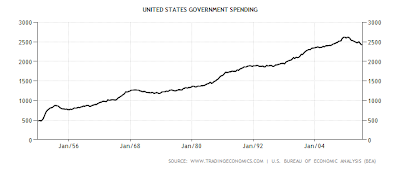
Ascending graph of US Government Spending from 1950 to 2013
US Government Spending (1950-2013)
Municipalities and states, on the other hand, can't print currency. Not being able to inflate out of their debts, they have no other alternative but to raise taxes. One way or the other, the citizen pays the bill for all federal, state or municipal governments. All governmental operational expenses are paid with more taxes or higher inflation.
Tax money comes from direct confiscation of your income. Inflation is a form of indirect confiscation of the same. Both penalize earners and savers while benefiting heavy borrowers.
Out of the two forms of confiscation, inflation is much easier to get approved by voters. They are simply never asked. All the federal government needs to do is print more money, which is often viewed as a good thing for the economy. On the other hand, additional taxes tend to upset voters; which is why the federal government has it so much easier than states or municipalities. Local governments are forced to either raise taxes, which is difficult, or balance their budgets by only spending what their present tax confiscation can afford.
Photo of sample of a generic US GSA charge card
GSA Charge Card
But it is not that simple. Local governments often ignore the health of their budgets by borrowing too much to keep their spending afloat. They borrow by issuing municipal bonds, for example. These bonds have the same effect on municipalities as credit cards have on consumers; they create the illusion of more money that there is. But this is an illusion that can only be sustained for a short period of time it crumbles. Soon, credit card companies, or bond holders in the case of governments, demand repayment of prior debt and higher interest for future loans.
Imagine the least financially responsible person you know. That is what governments are like. They just don't care about overspending while raising excessive debt. After all, tax payers and not politicians are on the hook for repayment. By the time any problems arise, the bureaucrats who created the shortfalls will be gone. In a way it's a game of musical chairs where the tax payer is the one looses when there are no more chairs left.
These are the exact problems that Detroit faces. For many decades now, the city has publicly promoted the idea that it was business-friendly. But the reality is that the city is anything but friendly.
Disputes between labor unions and city management are legendary. When plans to restore Cobo Center were being discussed, things became ugly. That the site of the world-famous Detroit Auto Show desperately needed repairs faded in relevance as soon as accusations of racism and corruption were voiced by both sides of the negotiation table. One was left wondering if either was really any better than the other. Needless to say, nothing good ever comes out of these encounters.
Elsewhere, there is Wayne State University, a great school situated in the middle of downtown Detroit. If you ever consider sending your kids to this college, you should be aware that it is not uncommon for the school police to have to drive students from their classroom to the school's parking lots soon after dusk. It is that dangerous. Can you imagine if you had to hire security to ensure your employees are fine when they leave work?
Photo of new Ford truck inside of the Detroit International Auto Show
Detroit Auto Show
The city has been so dysfunctional for such a long time that businesses have abandon it in multiple stages. For example, there isn't one national supermarket store within the city limits. After riots took place in the 60's many entrepreneurs relocated to Oackland county, just outside of Wayne county and the city of Detroit, leaving them without a tax base. It was therefore not surprising that the city would overspend. Between the unions and the city representatives who were all fixated on individual gain, the city spiraled out of control. I only wish that this terrible experience will serve as evidence of why governments can't just milk businesses.
Without tax payers to cover the debt, the city has to rely on someone else to pay the bill.
A bail out by the federal government would mean that conservative tax payers in states like Nebraska will have to pay the bill.
Right now the state of Michigan has named a city administrator to try to negotiate down the debt to a manageable level. To do this, he is facing anger from many. City employees will see their pensions shortchanged while their salaries take a hair cut. Unions will have to give up previously concession gains. Lenders will lose their money. Only by distributing the pain between all stake holders can the city prevent a bankruptcy that would wipe out all city assets while granting everybody much less. Bankruptcies are ever only good for attorneys.
The challenge is thus difficult. The odds are that tax payers will have to pay. But where will these payer come from is the main question. Without knowing it, you are already carrying a ticket to see who gets to pay. Maybe you get lucky.
Perhaps most disturbing is the fact that Detroit isn't the only city in trouble. There are cities all around the nation facing the same problems. Even within Michigan, several cities have emergency managers in place trying to solve their issues. Moreover, there are even several states facing unsustainable levels of debt.
As if Enron's collapse wasn't enough for all of us to learn, state governments everywhere are cooking their books. They are showing reduced budget shortfalls in their balance sheet. Recently, Moody's analysed the way their pension liabilities are calculated. In their opinion, there is about $1.5 trillion in liabilities that is not being recognized as liabilities.
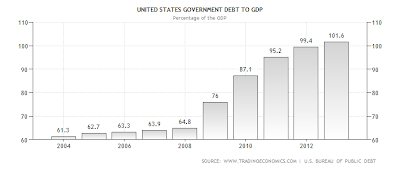
Chart of US Debt to GDP from 2004 to 2013
US Debt to GDP (2004-2013)
And how about the national debt? Well, the federal government is now running its largest debt level in history (see the Debt-counter on the right column of this blog for up-to-the-second updates). I find the fact that those who argue in favor of such high leverage make reference to the debt-to-GDP ratio . They suggest that, as long as debt remains within a given percentage of GDP, everything is fine. But implied in their message is that as long as your business makes good money, it's OK that government spends it. After all, two thirds of all GDP (Gross Domestic Product) comes from the transactions that you, the business community, create. The other third comes from your employees' consumption, which was possible thanks to your business as well.
It is a matter of time before taxes will increase. Like with Enron, there are never any problems until there are problems. But you can't wait. Since most taxes today are paid by citizens and not by businesses, politicians wanting to find new places where to confiscate income will aim their attention at businesses; especially now that high unemployment means that consumers have no more money to get. You now understand why the Obama administration has targeted taxes on business and the rich so aggressively. If they wish to continue spending, they really have no other logical alternative.
Photo f Halliburton Booth at an oil industry trade show
Halliburton
Look at your state. Is it fiscally irresponsible? How about your city? Consider moving some or part of your operations. I know that this is easier said than done, but you are the manager and are supposed to plan a better future for your business. Companies like Halliburton have even moved their headquarters to countries like Dubai. If not the whole company, at least incorporate elsewhere. If you are small business, you now know why large corporations rarely incorporate in their home state. An adequate business model calls for hedging these sorts of risks.
Yesterday we talked about the impact that additional taxes could have on marginal businesses, especially during recessionary times. Today, we are seeing the widespread problem of uncontrolled spending at all levels of government. We also saw what can happen when things break, like in the case of Detroit. The fact is that, in the aggregate, the picture is not great.
Is it possible that your taxes could skyrocket? It is almost a certainty that they will. Is it probable that it will happen in the next two years? No; the probability is low today. But relying on the low probability of immediate-harm as a reason to delay finding ways to hedge the risk is unacceptable. Your employees and your own family depend on you making the right decision. I therefore suggest that you look at a way to exploit the tax rate arbitrage between different cities and states. Make the appropriate plans to reduce your risk. It could be a matter of life or death for your business at a time when things are already difficult enough.

Monday, July 1, 2013

Higher Taxes - Your Business at Risk

Naive business owners think that excessive taxes don't hurt their business. Experienced managers disagree. This is why large businesses, those managed by seasoned leaders, do everything to reduce their tax burden while small businesses don't.
Photo of yellow sign with legend "In Case of Zombie Attack Pull Cord..."
Look-out for zombie companies
The solution to the disagreement lies at the margin. Taxes come out directly from the business' bottom line. As a result, changes in tax rates push any marginal business into bankruptcy. Let me explain.
Businesses that can't make a profit disappear, period. So we will deal only with the survivors. From those that continue to exist, a simple statistical distribution analysis will show that most reside near the margin. These living-dead businesses operate around the zero profit line over time; just making enough to continue to operate another day. They see times when money is lost; times when they quickly burn through cash reserves. Then there are those times when they regain the money needed to replenish the lost cash. The effects from such cyclicality vary depending on the industry.
Car makers, for example, see times when earnings are so good that everyone, including their labor unions, negotiate better deals, But the inevitable industry slow down seems to always catch them by surprise, triggering all sorts of emergency plans to save the business. If it were not for the special privileges they secure during these tough times, these factories would disappear.
Insurance companies see similar patterns. Low casualties result in exceptional dividends most of the time. Then, a catastrophe somewhere forces them to request emergency help to ensure that their reimbursement funds are not wiped out.
Photo of old classical style building with "Insurance" carved on its facade
Insurance Company
But small businesses don't have anyone whom to run to for help. If anything, their cost of capital increases during difficult times, making a recovery even more difficult. Cash can get so expensive to the small business that it easily overpowers all profits.
Yes, like insurance companies, when business is good, these companies return acceptable profits. Unfortunately, it is the down cycles that are terminal for many.
And then there is the timing of tax increases. Taxes usually increase when government is not getting enough in collections, which happens during economic slow downs. This means that the time when marginal businesses face the most risk, their funding gets much more expensive and uncle Sam demands additional confiscation.
That's when a small change in net after tax profits of just a few points will have a disproportional impact in the number of surviving businesses. As soon as cash reserves are depleted, a situation that's even worse during long recessions, many businesses will seize to participate in the market.
Photo of glass jar with white "Taxes" label and a few one hundred dollars inside
Taxes
I am therefore not talking about whether businesses should shoulder their civil responsibilities or not. It's a matter of life or death to the businesses just hanging on. Let's remember that, when a marginal business closes its doors, several non-marginal jobs also disappear. Consequently, economic losses multiply when employees are accounted for.
It also doesn't mean that politicians can't ever raise taxes. A politician who understands business-drivers can find ways to compensate for the losses. For example, an increase in taxes that's matched by a decrease in regulation will give businesses the ability to innovate their way into newly found profits. Since regulations raise barriers to entry and stifle innovation, their absence could do the opposite, thus creating the new opportunity.
Although workable, a trade between increased taxes and less regulation would not be symmetrical. Higher taxes would be certain plus would lower profits and cash in the short term. Innovation, on the other hand, is not certain. Moreover, any cash that results will take a long period to materialize. This unbalance creates the need for cash float; which a smart politician could also solve while structuring the trade.
The resulting asymmetry in certainty and in duration would make the outcome for the business similar to that from other capital investments. Thinking about it, by offering to reduce regulations, government is indirectly driving businesses to increase CAPEX; which would be invaluable for the economy in the long term. While not an ideal trade, government wins, the economy wins and companies win; all thanks to business innovation and a little bit of patience.
Also keep in mind that this trade-off isn't the only tool available to politicians. I just gave an example. There are thousands of possibilities. All that's required, as I suggested, is that politicians understand business drivers.
Unfortunately, this is something that the present White House has demonstrated to be impossible. They either want to do the right thing but are incompetent or are very competent but do not want to do right. I'll let you chose which is better.
Red poster with legend "Last Day" "after 104 years" "Sun" "your business name" "going out of business" "negotiate now!!!" "your address here"
Business Closing Sign
Detractors of any idea that promises to help businesses will surely see this trade as way to promote greed. They will fail to notice the tax increase and will push for more business pain. But they would be absolutely wrong.
What would happen if all businesses disappeared? We know that people would still find ways to earn a living. Centuries ago, humans had no companies and still managed to survive. But the key word here is survive. Without businesses, productivity collapses leaving everybody with less food, less home, less clothes and less stuff. Why else would people form production groups if it weren't because groups increase individual productivity, thus raising standards of living? We must therefore protect and preserve businesses whether wealth redistributionists like Obama understand it or not.
Now that here is the next concern. What does a bankrupt city like Detroit mean to you and your business in the form of future taxes? In short, a lot. Tomorrow, we will look at the tidal wave gaining force. The resulting economic impact demands your undivided attention.